The Enemy of Wealth (Step 5: The Credit Card Debt)
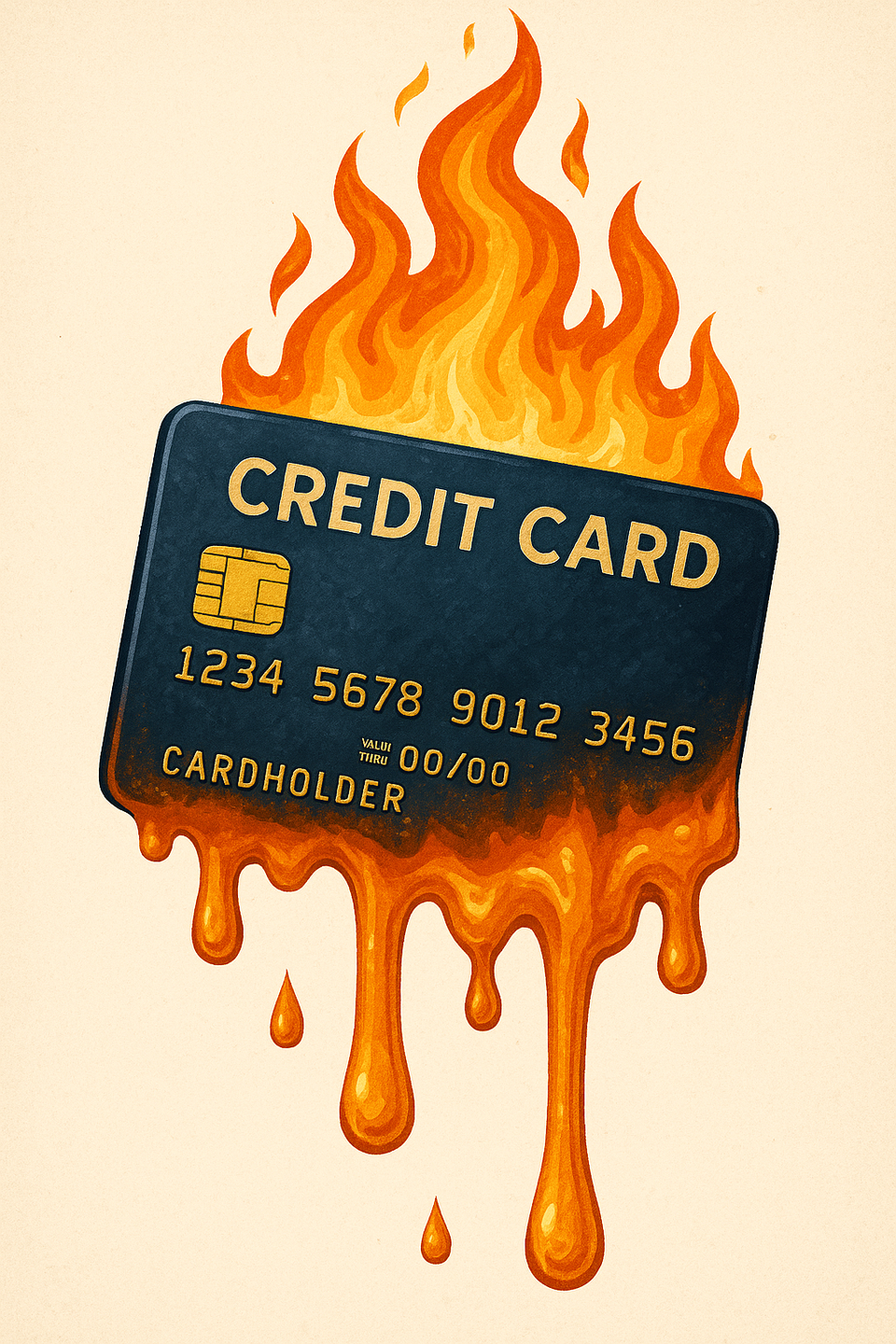
What Makes Credit Card Debt So Dangerous?
Credit card debt is the highest-interest debt that most consumers will ever hold. Left unchecked, it will quickly erode your wealth, your life, and your mental health. Just like how, in investing, compound interest is our powerful friend—the opposite is true of credit card interest. It's compound interest working against you!
Thankfully, there are both efficient and psychologically significant methods for tackling your credit card or other high-interest debt.
But first, let's recap where we are in our Base10 Basics steps:
- Step 1: We created our Budget
- Step 2: Covered our Essentials
- Step 3: Set aside $1,000 in our Emergency Fund
- Step 4: Took advantage of our free money with our Employer Match
We’ve created our base, and now we’re ready to build by tackling the heaviest weight dragging down our finances.
Why This Step Comes Before Investing
This might be my favorite post so far because I get to dig into one of my favorite topics—interest rates. They help us identify the most efficient place to put our money.
I touched on this in the Employer Match post, stating:
“You will be far better off taking your 100% match of free money than starting to pay down your 29% interest credit card or any other debt.”
Imagining that 100% match as a risk-free 100% return shows us that it’s better to place our money there than pay down a 29% interest debt—simply because 100% is greater than 29%.*
Since, outside of your Employer Match, there’s virtually nowhere to get a guaranteed return of 29% or more, you’ll always be better off paying down your credit card debt next.
*This is a simplification, but not by much. Since paying down debt is effectively like investing at a fixed interest rate, it can be viewed as a risk-free return, just like our employer match. Once risk enters the equation, the math gets more complicated. We’ll cover “Paying Down Debt vs. Investing” in an upcoming post.
Debt as a Psychological Weight
Credit card debt isn’t just a financial problem, it’s a mental and emotional burden. It can cloud our thinking and decision-making with questions like:
- Which bill do I pay first when money is tight?
- How can I juggle all these minimum payments?
- Should I save or pay this off?
- Am I stuck in this cycle forever?
Over time, decision fatigue kicks in. We lose willpower. We avoid thinking about it. And sometimes we turn to the very credit cards we're trying to escape from.
We’re not here to judge how or why you got into debt. Whether it’s $1,000 or $30,000, medical bills or video games, we’re here to make a plan and move forward. Let’s talk tactics.
Tactics to Crush Credit Card Debt
You’ve made the decision to tackle your credit card debt head-on. Let’s talk about how to do it effectively, without burning out or giving up.
Audit Your Budget and Free Up Cashflow
There’s almost always some kind of bloat in our budgets. I'm not suggesting cutting your entertainment or video game spending to $0 and living off rice and beans for a decade. Instead, take a hard look at your monthly expenses and find the low-effort wins.
A prime example? Subscription services.
Maybe stick to just one streaming service for a few months and rotate it when it gets stale. The cancel/resubscribe process is usually super simple, and this little trick can free up $50+ per month. That money applied toward credit cards will bring peace of mind that binge-watching Black Mirror just can’t.
Consider Balance Transfer or Low-Interest Cards
If you have decent credit, a balance transfer card can be a powerful tool. Many credit unions and banks offer 0% interest for 12+ months on transferred balances. That gives you a window to aggressively pay down your principal without interest dragging you down.
Alternatively, a low-interest credit card (even without flashy rewards) might save you 10–20% in interest over time. And that’s far more valuable than earning 2% cash back right now.
Automate Minimums + Add Extra Payments
Automation can be a powerful ally, if it works for your personality.
At a minimum, automate your minimum payments to avoid late fees and protect your credit score. Beyond that, consider automating extra payments each month to accelerate your progress without needing to constantly think about it.
Even if it’s just an extra $50–$100, automating it ensures it happens.
The Snowball vs. Avalanche Method
There are two major approaches to paying down credit card debt: The Snowball Method and The Avalanche Method. Both work. One favors psychology; the other favors math. (Guess which is my favorite!)
The Snowball Method (Psychological Wins)
Pay off debts starting with the smallest balance—not interest rate.
How it works:
- List debts from smallest balance to largest.
- Make minimum payments on all debts.
- Put all extra money toward the smallest balance.
- Once that’s paid off, roll that total payment into the next smallest debt.
This method is emotionally motivating. You get early wins, feel progress, and stay engaged. This is critical if you struggle with momentum.
The Avalanche Method (Mathematical Efficiency)
Pay off debts starting with the highest interest rate—regardless of balance.
How it works:
- List debts from highest to lowest interest rate.
- Make minimum payments on all debts.
- Put all extra money toward the highest-interest debt.
- Once that’s paid off, move on to the next highest.
This method saves the most money over time and is the most financially efficient. But it may take longer to feel those “wins,” especially if your highest-interest balance is also your largest.
So Which Should You Pick?
Either method works! Pick the one you’ll stick with.
Bonus tip: You can even do a hybrid. Use Snowball to knock out a few tiny debts and then switch to Avalanche once you’ve built momentum.
Truth is, the actual interest difference between the two methods is often surprisingly small. There are great online tools that let you plug in your numbers and see the difference for yourself.
Freedom Costs Less Than You Think
I’d love to keep this post going with discussions on lifestyle creep, new debt traps, and the risks of investing too early. But for now, if you follow the steps above, you’ll have already built a stronger financial foundation than most.
Remember, it’s not about how you got here—it’s about choosing a better path forward. Every extra dollar you put toward your credit card debt is a vote for your future self.
Next up: Step 6: The Parachute Fund